
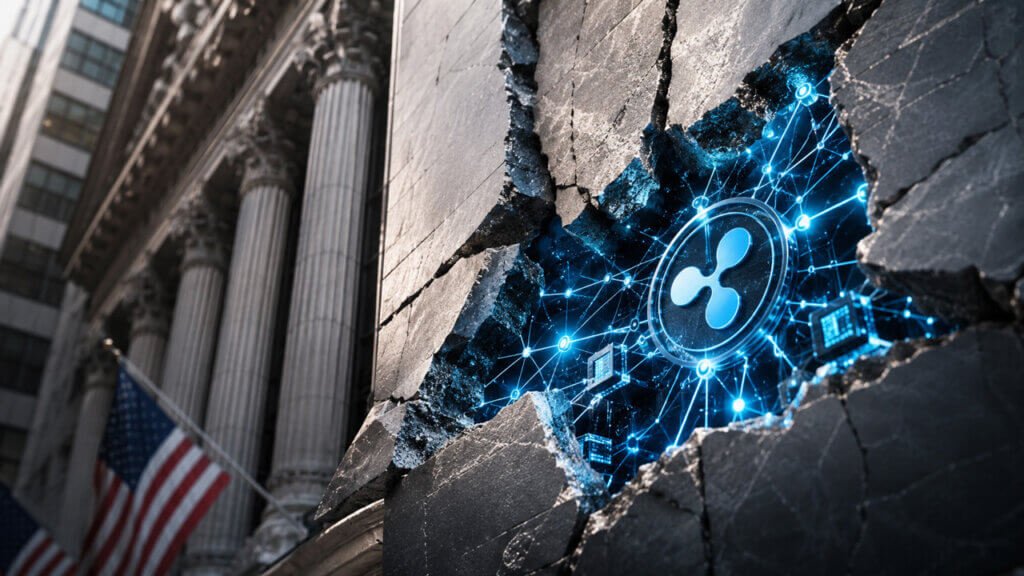
Ripple is moving deeper into institutional finance at the same time XRP traders are losing confidence in the short-term market. This creates a clear split between Ripple’s long-term business strategy and XRP’s current price action. On one side, Ripple is building infrastructure that looks more connected to Wall Street, payments, custody, treasury operations, and digital asset management. On the other side, XRP holders are facing losses, weak sentiment, and pressure from aggressive derivatives traders.
This divide has made XRP one of the more interesting assets in the current market. The company behind much of the XRP ecosystem is expanding its financial ambitions, but the token itself is still struggling to prove that institutional progress can translate into stronger price performance.
Ripple’s Institutional Push Is Getting Bigger
Ripple is no longer positioning itself only as a cross-border payments company. Its recent moves show a broader ambition to become a crypto-native financial infrastructure provider. The company has been expanding across institutional trading, custody, payments, stablecoins, treasury tools, and settlement services.
This matters because traditional finance is moving slowly but steadily toward digital assets. Banks, hedge funds, payment firms, asset managers, and corporate treasuries need regulated systems if they want to use crypto at scale. Ripple appears to be building products for that exact market.
The company’s recent trademark filings also point toward wider financial services, including prime brokerage, securities lending, hedge fund management, clearinghouse services, treasury operations, and digital asset management. These categories suggest Ripple wants to move beyond basic remittance use cases and enter deeper areas of institutional finance.
XRP Traders Are Under Heavy Pressure
While Ripple’s corporate story is becoming larger, XRP traders are facing a very different reality. XRP’s price has been under sustained pressure, and short-term holders have suffered major unrealized losses. Many traders who entered during earlier optimism are now underwater after buying near local highs.
This has weakened market confidence. When late buyers are trapped in losses, every small bounce can turn into a selling opportunity. Traders who simply want to recover capital often exit when the price rises slightly, which makes it harder for XRP to build strong momentum.
Sentiment has also cooled sharply. The excitement that surrounded regulatory progress, ETF expectations, and Ripple’s corporate expansion has faded as price action failed to follow through. In crypto markets, weak sentiment can become self-reinforcing. When traders expect more downside, they reduce risk, short the asset, or avoid new entries.
Derivatives Traders Are Betting Against XRP
A major reason XRP remains under pressure is aggressive short selling in futures markets. Derivatives traders have been using leverage to bet against the token, creating downward pressure even as some longer-term investors continue to accumulate.
This creates a market tug-of-war. Futures traders are pushing the bearish side with leverage, while spot buyers and ETF inflows are helping absorb some of the selling. The problem is that leverage can dominate short-term price movement. Even if spot demand is building underneath the surface, XRP still needs a visible technical breakout before traders believe the trend has changed.
This is why XRP’s current market structure feels uncertain. The asset may be forming an accumulation base, but it could also be pausing before another decline. Until buyers show stronger control, confidence will remain fragile.
ETF Inflows Offer a Bullish Counterpoint
The strongest argument for XRP bulls is that regulated investment demand has not disappeared. XRP-linked ETF products have continued to attract inflows, showing that some investors are using the weakness to build exposure. This is important because ETF demand represents a more structured and longer-term type of capital compared to short-term futures trading.
If ETF inflows continue, they could help create a stronger floor under XRP. Consistent demand from regulated products may reduce the impact of panic selling and give the asset a more stable investor base. However, ETF inflows alone are not enough. They must eventually overpower spot selling and force short sellers to cover.
For XRP to recover, bullish flows need to show up on the chart. Strong inflows matter most when they help the price reclaim key resistance levels and rebuild momentum.
RLUSD and XRP Could Strengthen Ripple’s Ecosystem
Ripple’s stablecoin RLUSD also plays an important role in the company’s institutional strategy. Stablecoins are becoming central to digital finance because they provide dollar liquidity, fast settlement, and easier movement between crypto and traditional markets.
For Ripple, RLUSD can support treasury workflows, payments, liquidity management, and institutional settlement. XRP can still act as a bridge asset in certain liquidity corridors, while RLUSD provides dollar stability. Together, they give Ripple more tools to serve financial institutions.
This could strengthen Ripple’s ecosystem over time. But it also creates a question for XRP holders. If Ripple’s institutional products grow, how much of that value will flow directly into XRP demand? The market is still waiting for a clearer answer.
The Big Question Is Value Capture
The main issue for XRP is not whether Ripple is active. The company clearly is. The real question is whether Ripple’s expansion creates stronger demand for XRP itself. Traders want to see a direct connection between corporate progress and token value.
If Ripple’s payments, custody, prime brokerage, and stablecoin infrastructure increase XRP utility, the token could benefit from stronger adoption. But if Ripple’s institutional business grows mostly through products that do not require XRP, traders may continue questioning the token’s long-term value capture.
This is why XRP’s price has not fully followed Ripple’s business narrative. The market needs proof, not only ambition. Until XRP demand becomes more visible, traders may remain cautious even as Ripple expands.
What Comes Next for XRP
XRP’s next major move depends on whether spot buyers and ETF inflows can overcome futures-driven selling. If buyers continue absorbing supply and short sellers begin closing positions, XRP could turn current pessimism into a recovery base. A strong breakout would rebuild confidence and make Ripple’s institutional story more powerful.
If selling pressure continues, however, Ripple’s expansion may remain a long-term narrative that fails to support short-term price action. That would keep XRP trapped between strong corporate ambition and weak trader confidence.
For now, Ripple is building toward institutional finance, but XRP still needs the market to believe that this growth will matter for the token. The company’s strategy is expanding. The token’s confidence test is still unfinished.
FAQs
Why are XRP traders losing confidence?
XRP traders are losing confidence because the token has faced sustained selling pressure, weak sentiment, and aggressive short selling in futures markets. Many short-term holders are also sitting on unrealized losses.
How is Ripple expanding into institutional finance?
Ripple is expanding through institutional trading, custody, payments, stablecoin infrastructure, treasury tools, digital asset management, and services linked to prime brokerage and financial clearing.
Does Ripple’s growth automatically help XRP?
Not automatically. Ripple’s growth can support XRP if it creates direct demand for the token, but traders still want clearer proof that institutional expansion will translate into stronger XRP value capture.
Why are ETF inflows important for XRP?
ETF inflows show that some regulated investors are still building XRP exposure. This can help absorb selling pressure, but the inflows must become strong enough to support a visible price recovery.
Can XRP recover from weak sentiment?
XRP can recover if spot demand stays strong, ETF inflows continue, and futures short sellers start closing positions. A clear technical breakout would be needed to rebuild trader confidence.