
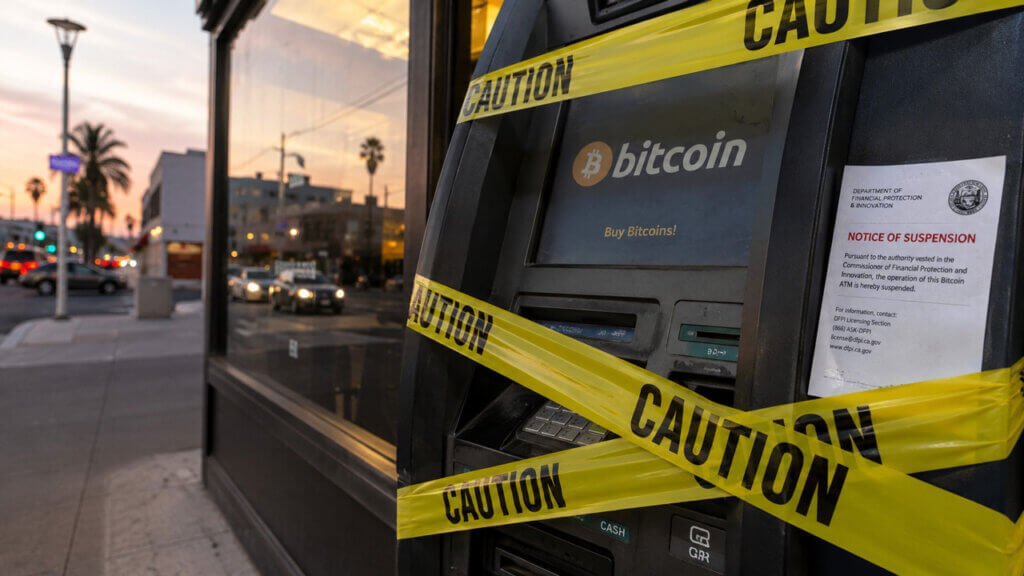
Bitcoin ATMs were once one of the most visible signs that crypto was moving from online trading screens into the real world. They stood in gas stations, malls, liquor stores, and corner shops, giving everyday people a simple way to buy Bitcoin with cash. For many early users, these machines made Bitcoin feel less like a complex digital asset and more like something anyone could access in minutes.
That era is now under serious pressure. Regulators across the United States and Canada are taking a much harder stance on crypto ATMs as fraud complaints, high fees, money laundering concerns, and legal actions reshape the business. What was once promoted as a fast gateway to Bitcoin is now being treated by many authorities as a risky channel for scams and consumer losses.
Bitcoin ATMs Made Crypto Feel Physical
Before crypto exchanges became easier to use, Bitcoin ATMs solved a real problem. Buying Bitcoin through an online exchange often required identity checks, bank transfers, waiting periods, and confusing wallet steps. A Bitcoin ATM made the process feel simple. A user could scan a wallet QR code, insert cash, and receive Bitcoin shortly after the transaction.
This physical experience helped Bitcoin feel more connected to everyday life. For people who did not trust banks, did not have easy exchange access, or wanted to use cash, these kiosks offered a direct path into crypto. The machine became crypto’s street-corner bank, giving the industry a real-world presence that online platforms could not match at the time.
But the same convenience that made Bitcoin ATMs attractive also created their biggest weakness. They were fast, cash-based, and often expensive. Fees could be extremely high, and many users did not fully understand how irreversible Bitcoin transactions worked. Once funds were sent to a wallet, there was no chargeback, no bank dispute desk, and no easy recovery path.
Fraud Became the Biggest Problem
The biggest reason regulators are now moving against Bitcoin ATMs is fraud. Scammers have used these machines in social engineering schemes where victims are pressured to withdraw cash and send Bitcoin to a wallet controlled by criminals. Elderly users have been especially vulnerable because scammers often use fear, urgency, or fake authority to push them into completing transactions.
This is a major difference between Bitcoin ATMs and traditional banking. If someone is tricked into making a bank transfer or card payment, there may be some chance of a dispute, investigation, or reversal. With Bitcoin, the payment settles on-chain and cannot be reversed by the ATM operator or any government agency.
That finality is part of Bitcoin’s core design, but it becomes dangerous when victims are misled. As fraud reports increased, regulators gained more political and legal support to restrict the industry. For lawmakers, the issue is no longer just about crypto innovation. It is also about consumer protection, financial crime, and public safety.
Bitcoin Depot’s Collapse Shows the Pressure
The collapse of Bitcoin Depot’s ATM network became a major symbol of the industry’s changing reality. The company had been one of North America’s largest Bitcoin ATM operators, with thousands of machines across different locations. Its Chapter 11 filing and decision to take roughly 9,700 machines offline showed how quickly the business model can break when revenue falls, legal pressure rises, and compliance costs increase.
The company’s financial problems also revealed how difficult the kiosk model had become. Revenue dropped sharply, gross profit collapsed, and legal issues added more strain. At the same time, regulators and attorneys general in multiple states were taking action against crypto ATM operators over scam-related losses, fee concerns, and consumer protection failures.
This does not mean every Bitcoin ATM business is identical, but it shows the direction of the market. Operators are no longer being judged only on access and convenience. They are being judged on fraud prevention, compliance systems, refund policies, fee transparency, and their ability to protect vulnerable users.
Regulation Is Changing the Business Model
Several states have started placing strict limits on Bitcoin ATM activity. These rules include daily transaction caps, fee limits, written warnings, stronger identity checks, and licensing requirements. Some areas are going even further by pushing complete bans on crypto ATMs.
For operators, these rules create a difficult situation. Bitcoin ATMs were profitable because they offered speed and convenience at a premium price. But every new compliance requirement makes the machines slower, more expensive to operate, and less attractive to users. When fees are capped and transaction limits are lowered, the old profit model becomes harder to maintain.
This creates a basic conflict. The safer a Bitcoin ATM becomes, the less it looks like the fast cash-to-crypto tool that made it popular. The more protections regulators add, the more the business starts to resemble a heavily controlled financial service with thin margins and high legal risk.
Crypto Access Has Moved Elsewhere
Bitcoin ATMs are also losing relevance because crypto access has become much easier through other channels. Today, many users can buy Bitcoin through regulated exchanges, fintech apps, brokerage platforms, and spot Bitcoin ETFs. These options are often cheaper, more familiar, and more closely connected to existing financial systems.
This shift weakens the main argument for Bitcoin ATMs. In the early days, they offered access that many people could not easily get elsewhere. Now, for many users, they are no longer the easiest or cheapest option. The remaining demand often comes from cash users, privacy-focused buyers, or people who may be more exposed to scams.
As crypto becomes more integrated into mainstream finance, regulators are becoming less willing to tolerate high-risk access points. Bitcoin is no longer rare enough for lawmakers to overlook consumer harm in the name of innovation.
What This Means for Bitcoin ATMs
The future of Bitcoin ATMs now depends on whether operators can build a safer and more compliant model. That may mean lower fees, stronger fraud warnings, transaction delays, ID checks, better monitoring, and cooperation with law enforcement. But if those protections become too expensive, many operators may simply leave the market.
Bitcoin ATMs helped introduce crypto to the real world, but their role is shrinking. The machines gave Bitcoin a physical presence when the industry needed one. Now that regulated platforms, ETFs, and apps provide easier access, the old street-corner model is losing its purpose.
The door is not fully closed yet, but regulators are making it much narrower. For Bitcoin ATMs to survive, they must prove they can protect users without losing the convenience that made them popular in the first place.
FAQs
Why are regulators targeting Bitcoin ATMs?
Regulators are targeting Bitcoin ATMs because of rising scam complaints, high fees, money laundering concerns, and consumer protection issues. Many victims have been tricked into sending irreversible Bitcoin payments through these machines.
Why were Bitcoin ATMs popular?
Bitcoin ATMs were popular because they allowed people to buy Bitcoin with cash quickly. They made crypto feel more physical and accessible, especially before online exchanges became easier to use.
What happened to Bitcoin Depot?
Bitcoin Depot filed for Chapter 11 and took thousands of machines offline. The company faced falling revenue, legal pressure, scam-related allegations, and a business model that became harder to sustain under stricter regulation.
Are Bitcoin ATMs being banned?
Some states and regions are moving toward bans or strict restrictions. Others are using fee caps, daily limits, disclosure rules, and stronger compliance requirements instead of full bans.
Can Bitcoin ATMs survive in the future?
Bitcoin ATMs may survive if operators create safer, cheaper, and more compliant systems. However, the old model of fast cash transactions with high fees is becoming much harder to defend.