
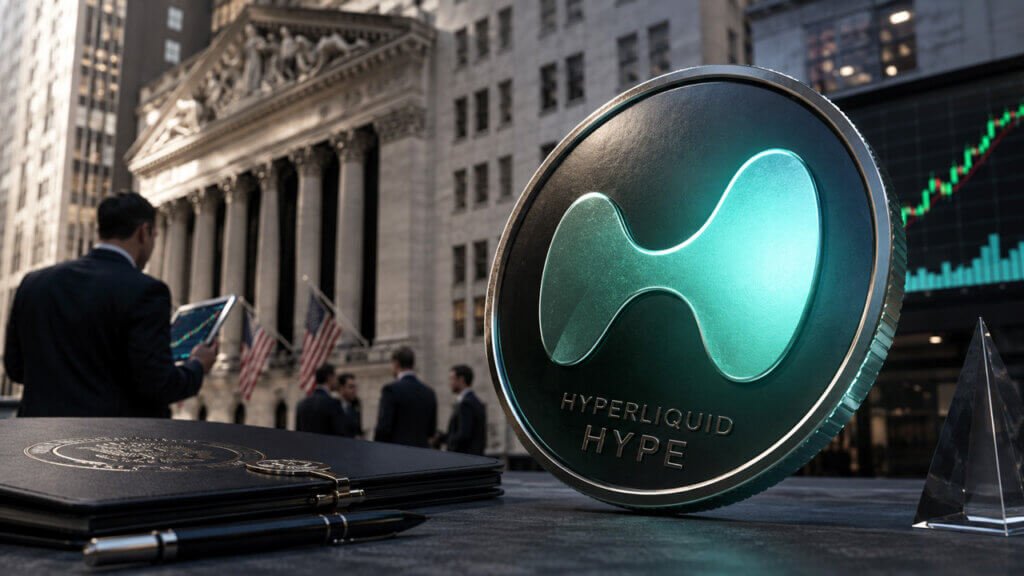
Hyperliquid’s HYPE token has moved into the spotlight after reaching a new all-time high, but the rally is about much more than one price milestone. The market is no longer treating HYPE only as a fast-moving DeFi token. Traders are beginning to price it as a direct bet on the future of 24/7 derivatives infrastructure, institutional crypto access, and the growing demand for perpetual futures.
HYPE reached $68.64 on May 30 after gaining roughly 50% in a month, supported by heavy trading volume and a powerful mix of catalysts. ETF inflows, US regulatory validation for Bitcoin perpetual futures, and fresh Wall Street attention have all arrived at the same time. Together, these factors have changed the way investors are looking at Hyperliquid.
HYPE’s All-Time High Has a Bigger Message
A new all-time high is usually a technical headline, but HYPE’s move carries a deeper market signal. Hyperliquid has built one of the strongest decentralized perpetual futures venues in crypto, and the token is now being valued as exposure to that infrastructure.
Perpetual futures are one of the largest trading categories in crypto because they allow traders to take long or short positions without contract expiration. Hyperliquid became a major venue by offering fast execution, deep liquidity, and a crypto-native trading experience. The rally shows that investors are now asking whether that model can become more than a DeFi success story.
The key shift is that Hyperliquid is no longer being judged only by token momentum. It is being compared with exchanges, derivatives venues, and market infrastructure businesses. That is why the rally feels bigger than a chart breakout.
ETF Inflows Are Giving HYPE a New Buyer Base
One of the clearest drivers behind the rally is ETF demand. US-listed HYPE products from Bitwise and 21Shares have already attracted more than $136 million in cumulative net inflows within their first 13 trading sessions. This gives HYPE something many DeFi tokens do not have: a regulated access route for traditional investors.
That matters because many institutional investors cannot or do not want to interact directly with DeFi protocols. Buying a token through wallets, bridges, decentralized exchanges, or offshore venues creates compliance and operational friction. A regulated ETF wrapper removes much of that barrier.
This changes HYPE’s investor base. Instead of relying only on crypto-native traders, the token can now attract capital from portfolio managers, advisors, and institutions that prefer familiar market structures. If ETF demand continues, it could create steady buying pressure and reduce the amount of available float in the market.
CFTC Approval Validates the Perps Category
The second major catalyst is the US regulatory shift around perpetual futures. The CFTC approved KalshiEX’s BTCPERP contract, making it the first Bitcoin perpetual futures product cleared for listing on a US-regulated exchange. This approval does not directly approve Hyperliquid for US users, but it validates the product category that Hyperliquid has already built at scale.
For HYPE investors, this matters because regulatory recognition can reduce the discount applied to perpetual futures infrastructure. Before this, US-regulated perps looked almost impossible. Now, the market can imagine a path where regulated venues, licensed front ends, institutional partnerships, or compliant wrappers bring more capital into the category.
There is also a competitive risk. Coinbase, Kalshi, and other regulated venues may capture flows that Hyperliquid cannot legally serve. But the bigger bullish argument is that US-regulated perps could expand the total market instead of simply taking share from existing venues.
Wall Street Is Paying Attention
The rally also gained strength after ICE CEO Jeffrey Sprecher publicly compared Hyperliquid’s trading activity with Nasdaq. That type of comment matters because ICE owns major financial infrastructure, including the New York Stock Exchange. When a traditional exchange leader talks about Hyperliquid as a serious market-structure benchmark, it changes the conversation.
Hyperliquid reportedly clears around $180 billion in monthly perpetual futures volume and controls more than 70% of the decentralized perp market. Those numbers make it difficult to dismiss the platform as a niche DeFi project. The market is starting to recognize that Hyperliquid has built real trading infrastructure with global activity.
This kind of Wall Street attention can help reprice HYPE. Investors are not only buying a token. They are buying exposure to a platform that may represent how future derivatives markets operate around the clock.
Buybacks Add a Fundamental Anchor
Another important part of the HYPE story is Hyperliquid’s buyback model. The protocol directs nearly 99% of revenue toward daily open-market HYPE purchases. This creates a direct connection between platform activity and token demand.
If trading volume rises, protocol revenue can increase. If revenue increases, buyback demand can strengthen. That creates a structure where the token may benefit directly from usage growth, especially when ETF inflows are also absorbing supply.
This is why the latest all-time high feels different from a pure speculative spike. The rally is supported by a combination of protocol revenue, buybacks, ETF demand, and a stronger institutional narrative. That does not remove risk, but it gives the move a more serious foundation.
The Main Risk Is Competition From Regulated Venues
The biggest question now is whether regulated US venues help Hyperliquid or hurt it. If regulated Bitcoin perps increase overall demand for perpetual futures, Hyperliquid could benefit as the dominant crypto-native venue. More institutional attention to the category could raise the value of the platform that proved the model first.
But if regulated venues take meaningful market share, HYPE could face pressure. Coinbase, Kalshi, and other compliant platforms have customer bases, legal clarity, and institutional relationships that Hyperliquid does not fully have. If traders prefer regulated access, Hyperliquid’s offshore base could become less powerful over time.
This is the key test behind the rally. HYPE is pricing in the idea that the market is expanding, not that Hyperliquid is being replaced.
What Comes Next for HYPE
HYPE’s next phase depends on whether ETF inflows continue, protocol revenue stays strong, and Hyperliquid maintains its execution advantage. If the platform keeps dominating decentralized perps while regulated markets expand the total opportunity, HYPE could continue trading as a leading proxy for 24/7 derivatives infrastructure.
If ETF inflows reverse or US competitors begin pulling meaningful volume away, the token could reprice quickly. A rally this strong always carries risk, especially when expectations move faster than fundamentals.
For now, Hyperliquid’s HYPE rally is not only about a new all-time high. It is about a market deciding whether a DeFi derivatives platform can become a serious piece of global trading infrastructure.
FAQs
Why is HYPE rallying?
HYPE is rallying because of strong ETF inflows, a new all-time high, CFTC validation of Bitcoin perpetual futures, Wall Street attention, protocol buybacks, and Hyperliquid’s dominant position in decentralized perps.
What was HYPE’s new all-time high?
HYPE reached a new all-time high of $68.64 on May 30 after gaining roughly 50% over the month.
Why do HYPE ETFs matter?
HYPE ETFs matter because they give institutional and traditional investors a regulated way to gain exposure to the token without directly using DeFi wallets, bridges, or offshore trading venues.
How does the CFTC approval affect Hyperliquid?
The CFTC approval of a US-regulated Bitcoin perpetual futures contract validates the perps category. It does not directly approve Hyperliquid, but it shows that perpetual futures can exist inside regulated US market structures.
What is the biggest risk for HYPE now?
The biggest risk is that regulated competitors like Coinbase or Kalshi could take market share from Hyperliquid. Another risk is that ETF inflows slow after the strong rally, reducing one of the token’s main demand drivers.