
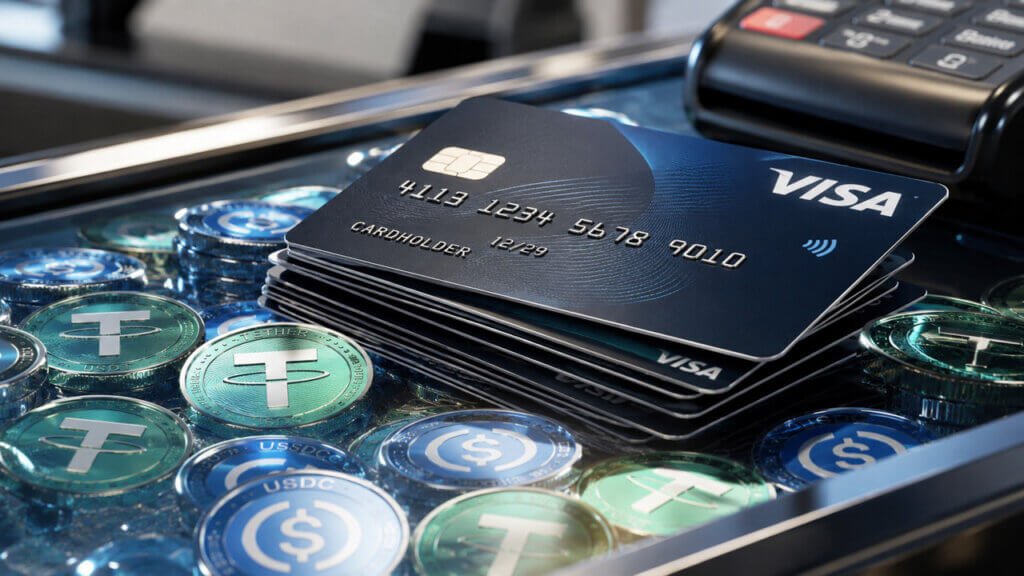
Stablecoins were once seen as a direct threat to credit card networks. The idea was simple. If people could send digital dollars instantly on blockchain rails, merchants would no longer need Visa, Mastercard, banks, processors, chargeback systems, or expensive card fees. Crypto would create a faster and cheaper payment layer that could move money without the old financial middlemen.
But the market is moving in a different direction. Instead of replacing Visa, many stablecoin companies are now building on top of Visa’s network. Crypto card programs are growing because users still want the same experience they already understand: tap a card, pay a merchant, and let the payment system handle everything behind the scenes. Stablecoins may be changing the funding source, but Visa is still controlling the consumer payment interface.
Stablecoins Solved Settlement, Not Merchant Acceptance
Stablecoins are powerful because they can move value across blockchain networks quickly. They are useful for trading, treasury management, cross-border transfers, and dollar access in markets where banking services are limited. In those areas, stablecoins have clear advantages over traditional financial rails.
But retail payments are different. Paying at a store is not only about moving money from one wallet to another. It also involves merchant acceptance, fraud checks, refunds, dispute handling, compliance, conversion, rewards, and user protection. This is where card networks remain strong.
Visa already has one of the largest merchant networks in the world. A stablecoin wallet may be able to send USDC or USDT instantly, but that does not mean every coffee shop, grocery store, gas station, or online retailer wants to accept blockchain payments directly. Merchants do not want to manage wallets, private keys, on-chain confirmations, gas fees, or stablecoin redemption risk. They want payments that work inside their existing systems.
That is why stablecoin cards are winning over direct stablecoin checkout. The user can spend crypto-backed dollars, while the merchant receives a familiar card payment. The blockchain may fund the transaction, but Visa still completes the last mile.
Visa Turned a Threat Into a Distribution Channel
Visa’s strongest move has been treating stablecoins as infrastructure rather than only competition. Instead of waiting to be bypassed, Visa has been integrating stablecoins into its settlement and card-issuing ecosystem. This allows crypto companies to use stablecoins on the backend while still relying on Visa for global acceptance.
This strategy changes the whole stablecoin disruption story. If crypto users spend stablecoins through Visa cards, then Visa does not lose the transaction relationship. It remains part of the payment flow, keeps its merchant reach, and becomes the bridge between blockchain balances and real-world spending.
For stablecoin companies, this is also attractive. Building direct merchant acceptance from scratch is extremely difficult. Partnering with Visa gives them instant reach into millions of merchants. Instead of convincing every shop to accept stablecoins, they can issue a card that works almost anywhere Visa is accepted.
Crypto Cards Make Stablecoins Feel Normal
The biggest reason crypto cards are gaining traction is user experience. Most people do not want to think about blockchain networks when buying food, booking travel, or paying bills. They want a payment method that feels normal. A card does exactly that.
Behind the scenes, a crypto card can be funded by stablecoins or digital assets. At the point of sale, however, the experience looks like a regular card transaction. That removes the biggest friction for mainstream adoption. Users do not need to explain stablecoins to merchants. Merchants do not need to change checkout systems. The card network absorbs the complexity.
This is why Visa remains powerful. It owns the trusted interface between consumers and merchants. Stablecoins may improve settlement and funding, but cards still provide the behavior pattern people already know.
The Bypassing Dream Was Too Simple
The early crypto argument against credit cards focused heavily on fees. Merchants pay card fees, and stablecoins promised cheaper settlement. But card networks are not only fee collectors. They provide fraud protection, dispute resolution, consumer trust, merchant onboarding, compliance, authorization, and global interoperability.
Stablecoins can reduce certain settlement costs, but they do not automatically replace all those services. In fact, blockchain payments can create new problems. Transactions are often irreversible. Users can send funds to the wrong address. Wallet security becomes the customer’s burden. Refunds and disputes are harder to manage. For everyday retail payments, those problems matter.
This is why stablecoins are stronger in some areas than others. They work well for cross-border transfers, institutional settlement, crypto trading, and high-friction markets. But for open retail commerce, card networks still have a strong advantage because they handle risk and complexity at scale.
Visa Benefits From Stablecoin Growth
Stablecoin growth does not have to hurt Visa. In some cases, it may help the company expand into markets where traditional banking access is weak. If users in emerging markets hold stablecoins and spend through Visa-linked cards, Visa becomes the bridge between digital dollars and global merchants.
This is especially important in regions where people want access to dollars but do not have easy banking options. Stablecoins can give users digital dollar balances, while Visa cards can make those balances spendable in daily life. That turns stablecoins into a funding layer and Visa into the acceptance layer.
For Visa, this is a strong position. It does not need to defeat stablecoins. It needs to make sure stablecoin spending still travels through its network.
Crypto Companies Need Visa More Than Expected
The rise of crypto card providers shows that many stablecoin companies need traditional payment rails more than they first admitted. A wallet alone is not enough. A token alone is not enough. To reach mainstream users, stablecoin firms need compliance, issuing partners, merchant acceptance, fraud controls, and a familiar payment experience.
Visa provides much of that infrastructure. That is why crypto card startups and stablecoin payment companies are building around Visa instead of replacing it. The result is not pure disruption. It is integration.
This does not mean stablecoins failed. They are becoming one of the most important forms of digital money in crypto. But their strongest role may be as backend settlement and liquidity infrastructure, not as a complete replacement for consumer card networks.
The Future Is Hybrid, Not Replacement
The stablecoin versus credit card debate is becoming less about replacement and more about layering. Stablecoins can make money movement faster and more programmable. Visa can make that value usable at merchants around the world. Together, they create a hybrid payment model where crypto runs behind the scenes and card networks remain in front of the customer.
This may disappoint those who believed stablecoins would fully bypass the old system. But it also shows how financial adoption usually happens. New technology rarely replaces every layer at once. It often enters through the parts where it is strongest and connects to existing systems where they still work better.
Stablecoins walked into payments promising to remove Visa. Instead, Visa is turning them into another way to power card spending. That may be the real lesson of crypto payments: settlement can change quickly, but consumer payment habits are much harder to replace.
FAQs
Why were stablecoins expected to bypass credit cards?
Stablecoins were expected to bypass credit cards because they can move digital dollars quickly on blockchain rails without traditional card networks, banks, or processors. Many believed this could reduce merchant fees and remove payment middlemen.
Why is Visa still winning crypto card payments?
Visa is winning because it controls global merchant acceptance and familiar consumer payment behavior. Stablecoin companies can use Visa cards to make digital assets spendable almost anywhere without forcing merchants to accept crypto directly.
Do stablecoins replace Visa?
Not in most retail payments. Stablecoins can improve settlement and funding, but Visa still provides merchant reach, fraud tools, authorization, dispute handling, and a familiar payment experience.
Why do crypto companies issue Visa cards?
Crypto companies issue Visa cards because building direct merchant acceptance is difficult. A Visa card lets users spend stablecoin-backed balances through existing payment infrastructure.
What is the future of stablecoin payments?
The future is likely hybrid. Stablecoins may power backend settlement, cross-border transfers, and digital dollar balances, while Visa and other card networks continue handling the consumer and merchant payment experience.